
The format of the Drails Online Workshops is quite supple and informal. Usually, we meet for an hour, during which an invitee has approx. half-hour to give a presentation, followed by a discussion with DRAILS members and attendees. Our invitees usually get to choose the theme of their intervention. In the past, they discussed recently published articles, research project ideas, the activities of their own research centers, new legislative initiatives etc. We like to think of DRAILS as a place to soundcheck ideas.
If you like to present your ongoing research, do not hesitate to contact us!

Next events
You willl now find a list of all our upcoming (and past) events on our Eventbrite page!
Do not hesitate to follow us there for all the latest information!

Our past public events (until june 2024):
Workshop with J. Cabay and T. Vandamme on AI & TM Search
J. Cabay and T. Vandamme will deliver a presentation on one of their most recent study relating to the use of AI for TM search Engines before engaging with questions from the audience!
“Legally Blind? Findings on Transparency and Explainability through a Study of AI-Powered Trademark Search Engines”

The question whether two objects are similar in a relevant manner is core to intellectual property law (IP). The answer is extremely complex and entirely left to IP Offices and judges, respectively in the frame of administrative and judicial proceedings, without any proper analytic tools. Yet, algorithmic decision systems (ADS) are currently being developed and used by private companies for the purposes of IP enforcement (monitoring infringing goods online, filtering out content) and registration by IP Offices, outside of public scrutiny.
In the framework of our research project IPSAM (Intellectual Property Similarities Assessment Model), we subjected several publicly available trademark search engines to close scrutiny.
In the course of our study, we encountered several methodological and practical difficulties that in turn, evidenced normative issues related to transparency and explainability. Should we compute and process possibly inconsistent case law? How can we identify legal biases in technical solutions? Is it possible to study technologies despite trade secret protection? What methodology can we develop for evidencing overfitting? Should we limit transparency to AI qualify as ‘high-risk’?
And the critical question: are we legally blind?
Julien CABAY is full time Professor and Director of JurisLab at Université Libre de Bruxelles (ULB), as well as Associate Professor at Université de Liège. Besides, he is currently affiliated with KU Leuven, CEIPI (University of Strasbourg), Digital Law Center (University of Geneva), and a member of the Belgian Council for Intellectual Property. In the past, he has been Research Fellow and PostDoc Researcher at National Fund for Scientific Research, Visiting Research Fellow at Columbia University in the City of New York and Global Policy Fellow at Instituto de Tecnologia e Sociedade do Rio de Janeiro. His main fields of expertise are Copyright Law; AI & IP; Fundamental Rights & IP; IP & Open Science.
Thomas Vandamme is an engineer from ULB (specialty in Electronics and Telecommunications) currently in his final year of PhD. His doctoral thesis, promoted by Pr. Olivier Debeir (Engineering Faculty, ULB) and Pr. Julien Cabay (Law Faculty, ULB) is at the crossroads of their respective domains: the application of Deep Learning methods to the problem of Intellectual Property Similarity Assessment. The recent developments of his thesis have drawn him towards the evaluation of those systems, as a first step towards transparency and explainability
C. Koolen – Natural Language Processing and Law
In this Drails online workshop, taking place on 12 March 2020 C. Koolen will offer a presentation on the use of Natural Language Processing (NPL) for law.

This presentation takes a closer look at the impact of Natural Language Processing (NLP) in the legal domain. The presentation first provides the necessary background context surrounding recent developments before taking a closer look at how machines can interpret and interact with human language. It then considers and demonstrates several NLP applications that can be applied to legal tasks, including machine summarisation, document clustering, and text generation. The presentation concludes with some critical reflections on the benefits and shortcomings of using NLP in legal scholarship.
Christof Koolen is a postdoctoral researcher at the KU Leuven’s Centre for IT & IP Law, where he studies the use of Natural Language Processing (NLP) for legal research. He completed his PhD on the Internet of Things, focusing on select legal implications of smart devices and digital ecosystems in the EU. Before starting his PhD, Christof interned at several law firms in Brussels. He obtained a Master of Laws from the KU Leuven and a Magister Juris degree from the University of Oxford. (https://www.law.kuleuven.be/citip/en/staff-members/staff/00124399/)
M. Nišević - Profiling consumers through big-data analytics
In this Drails online workshop, taking place on 29 November M. Nišević offered a presentation about profiling, big data and consumer protection.

Maja Nišević investigates the practice of profiling using Big Data Analytics, with the main focus on the interplay between the European Union General Data Protection Regulation (GDPR) and the European Union Unfair Commercial Practice Directive (UCPD). This book is an interdisciplinary study of profiling as a technological tool, and of its legal framework, including comparative analysis of the case law on personal data processing and an analysis of the interplay between the GDPR and the UCPD.
Maja Nišević holds a PhD from the University of Verona in European and International Law Sciences regarding Legal Issues on Data in Information Society. Nisevic has a research focus on Big Data as a technology tool, AI, XAI, privacy and data protection law, consumer protection in the Big Data Age, comparative analysis of data protection law and theoretical analysis of lex specialis and lex generalis in the context of data and privacy protection. Maja Nisevic is currently a postdoctoral researcher at the CiTiP at the KULeuven.
K. Mamak - Robotics, AI and Criminal Law
In this Drails online workshop, taking place on 8 November K. Mamak offered a presentation about robotics, AI and criminal law.
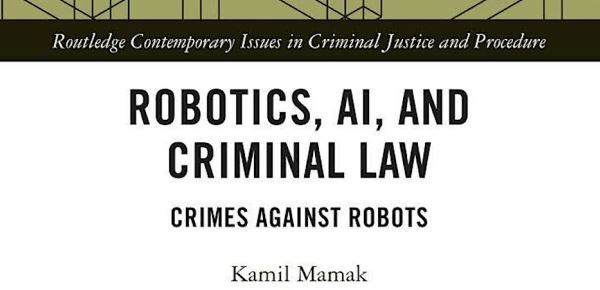
The book “Robotics, AI and Criminal Law: Crimes Against Robots” offers a phenomenological perspective on the criminal law debate on robots. Today, robots are protected in some form by criminal law. A robot is a person’s property and is protected as property. This book presents the different rationale for protecting robots beyond the property justification based on the phenomenology of human-robot interactions. By focusing on robots that have bodies and act in the physical world in social contexts, the work provides an assessment of the issues that emerge from human interaction with robots, going beyond perspectives focused solely on artificial intelligence (AI). Here, a phenomenological approach does not replace ontological concerns, but complements them. The book addresses the following key areas: Regulation of robots and AI; Ethics of AI and robotics; and philosophy of criminal law.
Kamil Mamak is a philosopher and a lawyer. He is a postdoctoral researcher at the RADAR: Robophilosophy, AI Ethics and Datafication research group at the University of Helsinki and an assistant professor at the Department of Criminal Law at the Jagiellonian University. He is also a Member of the Board of the Cracow Institute of Criminal Law. He holds PhDs in law (2018) from Jagiellonian University and philosophy (2020) from the Pontifical University of John Paul II in Cracow. He has authored four book monographs, and his newest book, “Robotics, AI and Criminal Law: Crimes against Robots,” was published by Routledge in 2023. He has published more than 40 peer-reviewed journal articles and contributed chapters. His works were published in international journals, including the European Journal of Criminology; Ethics and Information Technology; International Journal of Social Robotics; AI & Society; Medicine, Healthcare, and Philosophy; Science and Engineering Ethics; European Journal of Crime, Criminal Law and Criminal Justice; Frontiers in Robotics and AI, and Criminal Justice Studies. He received a research grant from the National Science Center in Poland. He is a recipient of the Minister’s Scholarship for Outstanding Young Scientists.
D. Gunkel - Person, Thing, Robot
In this Drails online workshop, taking place on 25 October November D. Gunkel offered a presentation about legal concepts surrounding robots issue.

Robots are a curious sort of thing. On the one hand, they are technological artifacts—and thus, things. On the other hand, they seem to have social presence, because they talk and interact with us, and simulate the capabilities commonly associated with personhood. In Person, Thing, Robot, David J. Gunkel sets out to answer the vexing question: What exactly is a robot? Rather than try to fit robots into the existing categories by way of arguing for either their reification or personification, however, Gunkel argues for a revolutionary reformulation of the entire system, developing a new moral and legal ontology for the twenty-first century and beyond.
In this book, Gunkel investigates how and why efforts to use existing categories to classify robots fail, argues that “robot” designates an irreducible anomaly in the existing ontology, and formulates an alternative that restructures the ontological order in both moral philosophy and law. Person, Thing, Robot not only addresses the issues that are relevant to students, teachers, and researchers working in the fields of moral philosophy, philosophy of technology, science and technology studies (STS), and AI/robot law and policy but it also speaks to controversies that are important to AI researchers, robotics engineers, and computer scientists concerned with the social consequences of their work.
David J. Gunkel is Presidential Research, Scholarship, and Artistry Professor in the Department of Communication at Northern Illinois University and Professor of Philosophy at Lazarski University in Warsaw, Poland. He is the author of Robot Rights, Of Remixology: Ethics and Aesthetics after Remix, and The Machine Question: Critical Perspectives on AI, Robots, and Ethics (all MIT Press).
M. Almada – Regulation by design in the governance of digital technologies
In this Drails online workshop, taking place on the 11.09. at 1pm M. Almada offered a presentation on Regulation by design in the governance of digital technologies

Regulation by design is an increasingly common approach in the governance of digital technologies. Under this approach, the developers of digital systems must adopt technical measures that implement the specific requirements mandated by law in their software. Some jurisdictions, notably the European Union (EU), have turned to regulation by design as a mechanism to automatically enforce legal requirements. However, I argue in this presentation that such an approach can have important implications for long-term governance. Drawing from examples of regulation by design in EU law, I show that by-design provisions delegate rule-making power to software designers, whose interpretations of the law become entrenched in digital systems. This delegation process suffers from legitimacy deficits, which are compounded whenever digital systems continue to enforce the designer-made rules as they operate for years and, sometimes, decades. Yet, these legitimacy deficits are not unavoidable, as regulation by design can be used to force designers to adopt technical and organizational practices that mitigate the risks of rule entrenchment to future generations. Therefore, any assessment of regulation by design approaches must not stop at the evaluation of technical instruments but consider the short- and long-term implications of design choices for the effectiveness and legitimacy of regulation.
Marco Almada is a third-year researcher at the EUI Department of Law, working on the regulation of artificial intelligence technologies. Before that, he pursued bachelor’s and master’s degrees in both computer science and law, and worked as a data scientist in various industries. Email: Marco.Almada@EUI.eu. Twitter: @MarcoAlmada.
Drails Workshop with Emmie Hine on AI Governance in the US and China
During this online workshop, taking place on the 25th of September at 1 pm, Emmie Hine presented her lastest paper: “Governing Silicon Valley and Shenzhen: Assessing a New Era of Artificial Intelligence Governance in the US and China“.

The article examines recent developments in artificial intelligence (AI) governance in the United States (US) and China, exploring their implications for each country’s development trajectory. Utilizing a philosophy-of-technology-informed framework, the article delves into not only the differences between the two countries’ approaches but also the reasons behind these differences. The US, after years of industry self-regulation, is slowly moving towards concrete legislation, while China is centralizing its development and regulatory initiatives. Despite China’s expressed desire for values-pluralistic international governance, existing tensions between the two, coupled with the US’s burgeoning coalition centered around AI with “democratic values,” might pose challenges to collaboration and international governance. Nonetheless, I content that both systems can be accommodated within a human rights framework, potentially paving the way for meaningful international governance efforts.
About Emmie Hine
Emmie Hine is a PhD candidate in Law, Science, and Technology at the University of Bologna, where she researches the ethics and governance of emerging technologies in different geopolitical contexts. Her dissertation focuses on the human rights impacts of XR technologies. She obtained a master’s degree in Social Science of the Internet as a Shirley Scholar at the University of Oxford, where her thesis compared American and Chinese AI governance policies. Her interest in AI governance also expands to the EU; her team, the LegalAIzers, were winners of the EU AI Act Grand Challenge at the University of St. Gallen. She has published articles about European, American, and Chinese AI governance and technology policy, and also writes the Ethical Reckoner newsletter. Prior to beginning her PhD, she worked as a full-stack software engineer at a data management software company in Boston. She is proficient in English and Mandarin, but her favorite language is TypeScript.
Drails workshop with Hadrien Pouget on “Red-teaming as an avenue for international cooperation on AI”
During this online workshop, taking place on the 11 of October, at 1 pm Hadrien Pouget delivered a presentation on “Red-teaming as an avenue for international cooperation on AI”

Red-teaming has emerged as a best-practice among developers of frontier AI systems, especially large language models (LLMs). The voluntary commitments made by seven leading AI labs in partnership with the White House featured red-teaming as an essential tool. By having participants test a system adversarially, undesirable behaviours can be better identified and mitigated. Opening up this exercise to the international community could offer a compelling first step in establishing more formal form of international AI governance. A successful project would contribute to a shared appreciation of the risks and benefits these systems provide, and a platform to develop and disseminate best practices. However, there are a number of public and private interests at play that must be acknowledged, and many possible arrangements.
Hadrien Pouget is an Associate Fellow in the Technology and International Affairs Program at the Carnegie Endowment for International Peace. He leverages his combined technical and policy backgrounds to analyze the course of AI regulation. He takes a particular interest in the technical and political challenges faced by those setting AI technical standards, which are set to underpin regulation. Previously, he worked as a research assistant at the computer science department at the University of Oxford. In this role, he published several papers on the testing and evaluation of machine learning systems.
G. Malgieri on his Book: Vulnerability and Data Protection law
In this Drails online workshop, which took place on the 26 of June (12AM CET) G. Malgieri offered a presentation of his Book: Vulnerability and Data Protection Law. The presentation was followed by a discussion with the audience.

About Gianclaudio Malgieri
Gianclaudio Malgieri is an Associate Professor of Law & Technology at Leiden University (the Netherlands), where he conducts research at the eLaw Center for Law and Digital Technologies. He serves as the Co-Director of the Brussels Privacy Hub, as an Associate Editor of Computer Law and Security Review (Elsevier), and coordinates “VULNERA“, the International Observatory of Vulnerable People in Data Protection. Gianclaudio has authored over 60 publications, including articles in leading international academic journals and a monograph, “Vulnerability and Data Protection Law” (Oxford University Press, 2023). His works have been cited by, inter alia, top international newspapers (The New York Times, The Washington Post, Le Monde, Politico, La Tribune) and European and International Institutions.
About the Book
Vulnerability has traditionally been viewed through the lens of specific groups of people, such as ethnic minorities, children, the elderly, or people with disabilities. With the rise of digital media, our perceptions of vulnerable groups and individuals have been reshaped as new vulnerabilities and different vulnerable sub-groups of users, consumers, citizens, and data subjects emerge. Vulnerability and Data Protection Law depicts these problems and offers an investigation of the concept of data subjects and a reconceptualisation of the notion of vulnerability within the General Data Protection Regulation. The regulation offers a forward-facing set of tools that-though largely underexplored-are essential in rebalancing power asymmetries and mitigating induced vulnerabilities in the age of artificial intelligence. Considering the new risks and potentialities of the digital market, the new awareness about cognitive weaknesses, and the new philosophical sensitivity about the condition of human vulnerability, the author looks for a more general and layered definition of the data subject’s vulnerability that goes beyond traditional labels. In doing so, he seeks to promote a ‘vulnerability-aware’ interpretation of the GDPR.
A. Wernick on Smart cities and human rights

On the 15th of June, we received A. Wernick for a presentation on her last paper: Future-proofing the city: A human rights-based approach to governing algorithmic, biometric and smart city technologies”. As alwyas, the presenation was followed by a discussion with the audience.
About Alina Wernick
Dr. Alina Wernick, LL.M. acts as the Principal Investigator of the project “Smart City Technology and Long-term Human Rights Risks” at the Legal Tech Lab at University of Helsinki, Finland. She is also affiliated with the Helsinki Institute of Urban and Regional Studies (Urbaria) and an adjunct member of the Graduate Program in Science & Technology Studies at York University, Canada. Her research focuses on the socio-legal dimensions of technology and open models to govern intellectual property and data. She holds a PhD in Law from the Ludwig Maximilian University on patent law and open innovation and LL.M and LL.B. degrees from the University of Helsinki, Finland. Previously, she was affiliated with the Humboldt Institute for Internet and Society, the Max Planck Institute for Innovation and Competition, Germany and Aalto University, Finland.Description
The public sector has been rapidly adopting smart city technologies in areas ranging from law enforcement to transportation to healthcare. Smart city technologies have implications on a wide range of fundamental human rights recognized by international and European sources for human right protection. To mitigate these risks, several scientific communities as well as the EU lawmaker have proposed human rights-based approaches (HRBA) to govern algorithmic, biometric and smart city technologies. To understand the role of and opportunities for HRBA in the governance of smart city technologies, it is crucial to recognize that the emerging literature on HRBA and smart cities falls into two distinct streams, which do not always acknowledge and interact with one another: HRBA by design and HRBA in cities. In the former, human rights protections shape the design of the technology ex ante. The latter proposes more aspirational human rights-informed city governance that often goes beyond cities’ constitutionally mandated legal obligations to commit to human and fundamental rights. In this presentation, Alina Wernick will explain in more detail the theoretic background of each of the approaches in the light on recent research on the human rights impact of algorithmic, biometric and smart city technologies published in the Internet Policy Review Special Issue she co-edited on the topic.Nathalie A. Smuha – Algorithmic regulation in between the rule of law and the rule by law

On the 08th of May, we had the pleasure to receive Nathalie A. Smuha for a Drails workshop.
Public authorities are increasingly turning to algorithmic systems to apply and enforce the law, which is often denoted as ‘algorithmic regulation’. Their adoption of algorithmic regulation tends to be motivated by the desire to improve public services and to better fulfil citizens’ rights, thus seemingly contributing to the rule of law. However, in practice, many use cases have demonstrated how reliance on algorithmic systems can undermine the law’s protective power and instead lead to a rule by law. In this presentation, I seek to make sense of this apparent contradiction. By analysing a concrete example of algorithmic regulation, I examine how the algorithmisation of the law can alter its very nature and consider how this alteration risks eroding the protection that the law affords.
About Nathalie A. Smuha:
Dr Nathalie Smuha is a legal scholar and philosopher at the KU Leuven Faculty of Law, where she examines legal and ethical questions around artificial intelligence and other digital technologies. Her research focuses particularly on the impact of AI on human rights, democracy and the rule of law. She is the academic coordinator of the KU Leuven Summer School on the Law, Ethics and Policy of AI, and a member of the Leuven.AI Institute and the Digital Society Institute. Her work has been the recipient of several awards, and she has been a visiting fellow at the University of Birmingham Law School and at the University of Chicago Law School. Besides her academic activities, Nathalie Smuha regularly advises governments and international organizations on AI policy. She coordinated the work of the European Commission’s High-Level Expert Group on AI and is a scientific expert in the Council of Europe’s (Ad Hoc) Committee on AI. She is also a member of the UNESCO Expert Group on AI and the Futures of Learning, and a member of the OECD’s Network of Experts on AI. Nathalie Smuha is an attorney at the Brussels and the New York Bar, and works as of counsel at the law firm Quinz.
Nele Roekens – Human protection and AI: will the EU AI Act and the CoE Convention on AI provide adequate human rights protection and what is the role of National Human Rights Structures in their creation and enforcement?

On the 25th of April, we had the pleasure to receive Nele Roekens, from Unia.
During this session, Nele highlighted challenges posed by AI on human rights and explored some solutions to these, with a focus on non-discrimination. Existing legislative frameworks are insufficient to meet specific AI-related challenges. This is widely recognized and legislators – including the European Commission and Council of Europe – are at an advanced stage of negotiating new legal frameworks. She will comment on these legislative initiatives from a human rights perspective and highlight on the potential role of National Human rights Structures (NHRSs) within their creation, implementation and enforcement.
About Nele Roekens
Nele Roekens is legal advisor at Unia, equality body and National Human Rights Institution (B status). She specializes in equality law and human rights challenges posed by emerging technologies. She is co-chair of the Working Group on AI of the European Network of National Human Rights Institutions and represents this network at the Council of Europe during the ongoing negotiations on the framework Convention on AI and Human Rights. She is member of AI4Belgium’s Ethics and Law Working Group.
Jerome DE COOMAN – AI & detection of anticompetitive behaviours

On Thursday, March 30, 2023, Jerome DE COOMAN – was our guest for a Drails online workshop.
Artificial Intelligence (hereafter, ‘AI’) systems are widely adopted by public administrations. Competition law does not escape the rule. Recently, non-negligible efforts have been made in ex officio detection of anticompetitive behaviours (above all, bid-rigging) through AI-driven cartel screening.
This is unsurprising. On the one hand, AI systems promise to address well-documented flaws in human decision-making, e.g., arbitrariness or bias. On the other hand, AI systems carry the potential to strengthen ex officio investigations. Collusive behaviours are, currently, mainly exposed through leniency applications, whose number is decreasing. It has been suggested AI-driven cartel screening constitutes a useful complement to leniency programmes. AI-driven cartel screening flags indicators of collusion that then trigger the need for further investigation. This increases the probability of detection that destabilises the collusive equilibrium and incentivises leniency applications.
This presentation does not discard the benefits of AI-driven cartel screening. It argues, however, that this algorithmic shift is not a silver bullet. First, as a data-driven solution, algorithmic predictions and recommendations are significantly affected by problems in the availability and quality of data they rely on. Second, limited explicability of some AI systems challenges the duty to state reason that will only be satisfied if public servants using AI system are able to disclose how the different parameters were weighted and to what extent that recommendation was decisive for their final decision.
None of these drawbacks constitute a dead-end. Although not applicable to EU competition law, the EU Proposal for an AI Act provides interesting (at least, embryonic) solutions, i.e., data quality (art. 10 AI Act), transparency (art. 13 AI Act), human oversight (art. 14 AI Act), and accuracy (art. 15 AI Act). Drawing inspiration from these requirements, the presentation seeks to assess how to ensure the improvement of competition law proceedings while safeguarding fundamental rights.
Jerome DE COOMAN
Jerome De Cooman is Ph.D. candidate under the supervision of Prof. Dr. Nicolas Petit (European University Institute, Italy) and Prof. Dr. Pieter Van Cleynenbreugel (University of Liege, Belgium). His research focuses on whether, how, and when to regulate technologies (artificial intelligence in particular). As part of his Ph.D. research, Jerome pays very particular attention to the modernisation of competition law proceedings and the algorithmic shift in the fight against cartelisation.
Jerome is currently a Visiting Student at European University Institute studying the path dependence of regulations. Jerome is also teaching assistant at University of Liege since 2018 in EU Competition Law and EU law, (Big) Data and AI Applications courses. Since 2021, he is Administrative Manager at the Brussels School of Competition, Junior Editor for the Yearbook of Antitrust and Regulatory Studies (YARS) at the Centre for Antitrust and Regulatory Studies (CARS, University of Warsaw, Poland), and Junior Member of the Academic Society for Competition Law (ASCOLA). Jerome holds a Master of Laws from the University of Liege (2017), a Master of Management Sciences from HEC-Liege (2018), and the Law, Cognitive & Artificial Intelligence Technology Programme Certification from the Brussels School of Competition (2019).
Prof. Sarah Lamdan – book presentation “Data Cartels. The Companies That Control and Monopolize Our Information”
On the 20th of March (4-5 pm) we had the pleasure of welcoming Prof. Sarah Lamdan as a guest on our DRAILS workshop series. She will present her latest book “Data Cartels. The Companies That Control and Monopolize Our Information”, followed by a discussion with attendees.

Sarah Lamdan is Professor of Law at the City University of New York School of Law. She also serves as a Senior Fellow for the Scholarly Publishing and Academic Resources Coalition, a Fellow at NYU School of Law’s Engelberg Center on Innovation Law and Policy.
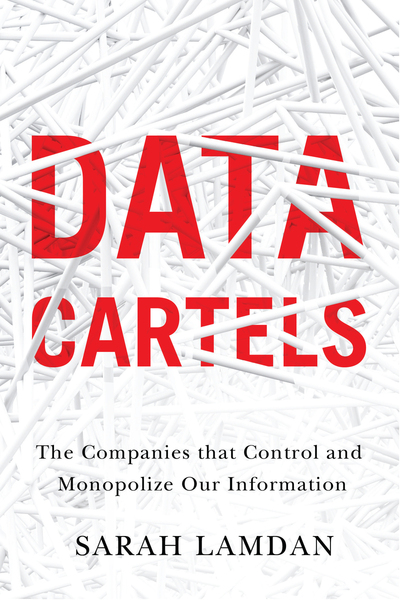
Her latest book, Data Cartels, revolves around the fact that, in our digital world, data is power. It brings us into the unregulated underworld of information hoarding businesses, where they reign supreme, using intimidation, aggression, and force to maintain influence and control over data. It demonstrates how the entities mining, commodifying, and selling our data and informational resources perpetuate social inequalities and threaten the democratic sharing of knowledge.
It is a reality today that just a few companies dominate most of our critical informational resources. Often self-identifying as “data analytics” or “business solutions” operations, they supply the digital lifeblood that flows through the circulatory system of the internet. With their control over data, they can prevent the free flow of information, masterfully exploiting outdated information and privacy laws and curating online information in a way that amplifies digital racism and targets marginalized communities. They can also distribute private information to predatory entities. Alarmingly, everything they’re doing is perfectly legal.
In this book, Lamdan contends that privatization and tech exceptionalism have prevented us from creating effective legal regulation. This in turn has allowed oversized information oligopolies to coalesce. In addition to specific legal and market-based solutions, Lamdan calls for treating information like a public good and creating digital infrastructure that supports our democratic ideals.
In this book, Lamdan contends that privatization and tech exceptionalism have prevented us from creating effective legal regulation. This in turn has allowed oversized information oligopolies to coalesce. In addition to specific legal and market-based solutions, Lamdan calls for treating information like a public good and creating digital infrastructure that supports our democratic ideals.
L.L.D. Ulla-Maija Mylly – ‘interface between trade secret and access to information in the context of Artificial Intelligence Act’

On the 9th of February (1-2 pm) we had the pleasure of welcoming LL.D. Ulla-Maija Mylly as a guest in our DRAILS workshop series. She will discuss the “Interface between trade secret and access to information in the context of Artificial Intelligence Act”.
LL.D. Ulla-Maija Mylly joined Hanken School of Economics in May 2022 when she was appointed as Associate professor in Commercial Law. She is currently serving Hanken as Academy Research Fellow and working on her Academy of Finland funded research project on trade secrets and data-driven economy..
She was a TIAS postdoctoral collegium researcher at the Turku Institute of Advanced Studies 2017-2019. She did her first LL.M. at University of Turku and the second at Kyushu University, Japan (International Trade and Business Law). Ulla-Maija has earlier worked among others in various research positions at the Turku School of Economics, University of Turku faculty of law, and as a practicing lawyer. She is trained on the bench. August 2017 – July 2018 she was a Visiting Research Fellow at Oxford Intellectual Property Research Center. For September – December 2022 she was a Visiting Researcher at King’s College London, Dickson Poon School of Law.
Ulla-Maija’s research interest covers copyright, patent law and trade secrets, and she has published research related to the fundamental rights as well. Mylly’s research interest lies on the underlying justifications for the regimes in question and potential differences these produce for interpretations. During the Academy of Finland funding period (2021-2026) Mylly will dissect the ambivalent nature of European trade secret protection between the intellectual property and unfair competition paradigms from the perspective of data-driven economy. The research will analyze ways to interpret the provisions of the Trade Secrets Directive in a manner that would be most suitable for the data-driven economy and to the needs of competition and innovation.
Ana Ramalho – legislative instruments overlap in the copyright law and its impact on the freedom to operate.
On the 27th February, 12.30-13.20 DRAILS hosted Ana Ramalho for a presentation on “the legislative instruments overlap in the copyright law and its impact on the freedom to operate”.
The EU legislative activity regulating the digital realm has been increasingly prolific. The overlap of instruments in the current legal framework has already been highlighted by previous research, for example, in relation to the European Media Freedom Act. One of the consequences of this overlap is the growing difficulty that market actors feel in defining their freedom to operate. This presentation will zoom in on a particular field – copyright law – and on how recent legislative developments, such as the Directive on Copyright in the Digital Single Market and the Digital Services Act, interact. The presentation will highlight possible gaps, overlaps and inconsistencies, and the impact that those might have on the freedom to operate of market actors.
Dr. Ana Ramalho is Copyright Counsel at Google. Previously, she was an Assistant Professor at Maastricht University, where she founded the Indie Art Legal Clinic (a pro bono legal advice service for artists and cultural entrepreneurs) and was awarded several grants and prizes, including the Fellowship from the IP Institute of Japan and the World Universities Network Research Mobility Award. Ana holds a PhD in Copyright and European Law from the University of Amsterdam (2014), a Research Master in Intellectual Property Law from the University of Lisbon (2008), and an LL.M. in Intellectual Property and Competition Law from the Munich Intellectual Property Law Center (2007). She is a member of the Editorial Board of the Journal of World Intellectual Property. She has been a guest lecturer and/or speaker at several foreign Universities and institutions. Ana’s most recent publications include a book on intellectual property protection for AI-generated creations (Routledge, 2022), and a co-edited book on International Perspectives on Disability Exceptions in Copyright Law and the Visual Arts (Routledge, 2021).
Dr Guido Noto La Diega – Internet of Things and the Law: Legal Strategies for Consumer-Centric Smart Technologies
On the 16th of January (12 – 1 pm), we had the pleasure of welcoming Dr Guido Noto La Diega as a guest in our Drails workshop series. They will be presenting their latest book, “Internet of Things and the Law: Legal Strategies for Consumer-Centric Smart Technologies”. Our Drails’ member and friend, Gaëlle Fruy, acted as discussant on the occasion.
Internet of Things and the Law: Legal Strategies for Consumer-Centric Smart Technologies is the most comprehensive and up-to-date analysis of the legal issues in the Internet of Things (IoT). For decades, the decreasing importance of tangible wealth and power – and the increasing significance of their disembodied counterparts – has been the subject of much legal research. For some time now, legal scholars have grappled with how laws drafted for tangible property and predigital ‘offline’ technologies can cope with dematerialisation, digitalisation, and the internet. As dematerialisation continues, this book aims to illuminate the opposite movement: rematerialisation, namely, the return of data, knowledge, and power within a physical ‘smart’ world. This development frames the book’s central question: can the law steer rematerialisation in a human-centric and socially just direction? To answer it, the book focuses on the IoT, the sociotechnological phenomenon that is primarily responsible for this shift. After a thorough analysis of how existing laws can be interpreted to empower IoT end users, Noto La Diega leaves us with the fundamental question of what happens when the law fails us and concludes with a call for collective resistance against ‘smart’ capitalism.
Dr Guido Noto La Diega is an award-winning Scotland-based Sicily-born academic with a passion for law and technology. They are Associate Professor of Intellectual Property and Privacy Law at the University of Stirling, Faculty of Arts and Humanities. At Stirling, Noto La Diega leads the Royal Society of Edinburgh Research Network SCOTLIN (Scottish Law and Innovation Network); is Deputy Chair of the Faculty’s Equality, Diversity, and Inclusion Committee; and carries out research at the Centre for Research into Information, Surveillance, and Privacy (CRISP). Currently, they are leading the AHRC-DfG-funded international research project ‘From Smart Technologies to Smart Consumer Laws: Comparative Perspectives from Germany and the United Kingdom’, in partnership with the universities of Osnabrück, Warwick, and Bonn. Outside of Stirling, Noto La Diega is Member of the European Commission’s Expert Group on AI and Data in Education and Training, Fellow of the Nexa Center for Internet and Society, Research Associate at the UCL Centre for Blockchain Technologies, and Co-Convenor of the Open Section of the Society of Legal Scholars, the oldest and largest society of law academics in the UK and the Republic of Ireland. Noto La Diega’s main expertise is in Internet of Things, artificial intelligence, cloud computing, robotics, and blockchain. Their work is animated by the conviction that the law should be pivotal to human-centric, and socially just sustainable technologies.

Aurore Troussel – The normative power of dominant digital platforms
On the 12th of October, we had the chance to host Aurore Troussel for a workshop dedicated to the presentation of her research on the normative power of dominant digital platforms.
The event was organized in collaboration with the research project PROSEco.
The normative power of dominant digital platforms
The past decades are characterized by the meteoric rise of digital platforms. Simultaneously, the number of scandals involving platforms increased and raised growing concerns about the unchecked power of these companies. Beyond the conventional threats posed by platforms and identified by the literature (e.g., platforms’ monopoly, fake news, personal data breaches, etc.), platforms are transforming our relations to the law and the regulation overall. This phenomenon is more subtle than the above-mentioned glaring issues, however it is at least equally important in relation to the rule of law. The analysis of the balance of powers between governments and digital platforms shows that a competition between States’ regulation and platforms’ regulation emerges. This phenomenon is of particular importance and needs to be documented. To understand how digital platforms are regulating cyberspace, it is necessary to analyze their architecture, tools, and behavior. This presentation sheds some light on the normative power of dominant digital platforms by providing an overview of their governance tools.
About Aurore Troussel
Aurore Troussel is a PhD student in law and innovation at the University of Montreal and HEC Paris. Her thesis focuses on the normative value of computer code and digital platforms. Aurore works as an affiliated researcher at the Cyberjustice Laboratory (Canada), where she mainly works on the development of machine learning algorithms for the analysis of court decisions. Aurore also works for the SMART Law Hub, a research laboratory in law and artificial intelligence hosted by HEC Paris and Institut Polytechnique. Aurore is qualified at the Paris Bar and specializes in data protection and competition law. She holds a master’s degree in European business law from Panthéon-Assas University and an LLM in law and international management from HEC Paris. During her training, Aurore had several professional experiences, including internships at the European Commission (competition law), in international law firms (Norton Rose Fulbright and Steptoe & Johnson), and in lobbying. In addition, Aurore worked as a legal counsel for an online dispute resolution start-up (justice.cool) for one year.

Presentation of the book ‘The Economics of Platforms – Concepts and Strategy’ – by its author: P. Belleflamme.
On the 15th of June, we had the chance to host Paul Belleflamme for a workshop dedicated to the presentation of its last book: The Economics of Platforms.
Book description
Digital platforms controlled by Alibaba, Alphabet, Amazon, Facebook, Netflix, Tencent and Uber have transformed not only the ways we do business, but also the very nature of people’s everyday lives. It is of vital importance that we understand the economic principles governing how these platforms operate. This book explains the driving forces behind any platform business with a focus on network effects. The authors use short case studies and real-world applications to explain key concepts such as how platforms manage network effects and which price and non-price strategies they choose. This self-contained text is the first to offer a systematic and formalized account of what platforms are and how they operate, concisely incorporating path-breaking insights in economics over the last twenty years.
About Paul Belleflamme:
Paul Belleflamme graduated in economics at the University of Namur (1991), where he received his doctoral degree in economics (1997). He also holds a Master of Arts in Economics from Columbia University (1992). In 1998, he became lecturer in economics at Queen Mary, University of London, where he obtained a Post Graduate Certificate in Academic Practice (PGCAP) in November 2001. Since September 2002, Paul is professor of economics at UCLouvain, where he is attached to the Center for Operations Research and Econometrics (CORE) and to the Louvain School of Management (LSM). Between January 2017 and August 2018, Paul took a leave of absence from UCLouvain so as to acquire new experiences; during that period, he was professor at AMSE (Aix-Marseille School of Economics) and visiting professor at Kedge Business School.
Paul’s main research area is theoretical industrial organization, with a special focus on innovation in the digital economy (which is also the main topic of his blog, www.IPdigIT.eu). Paul has published widely in leading economics journals and, with Martin Peitz, is the author of Industrial Organization: Markets and Strategies (Cambridge University Press, 2010 and 2015). Paul is a fellow of the CESifo Research Network. He is associate editor of Journal of Economics, co-editor of E-conomics and managing editor of Regards Economiques. He also served as associate editor of Information Economics and Policy, and of Review of Network Economics.

Liability for Defective Products in light of Connected Devices
On the 21st of April 2022, DRAILS member Gaelle Fruy presented her research on “Liability for Defective Products in the Light of Connected Devices“
Connected devices are now ubiquitous and their use is widespread among consumers. The risks of damage caused by these emerging digital technologies are real and therefore raise the question of the applicability of the Directive 85/374/EEC (“the Product Liability Directive”). Certain inherent characteristics of these technologies bring out the limits of key notions in the current defective product liability regime (such as the definitions of “product”, “default”, “producer”) and question whether the concept of “putting into circulation” remains relevant. A reform at the European level is under way and should be completed in the third quarter of this year. The presentation aims at outlining the risks related to the use of connected devices for consumers and explaining the limits of the current legal framework while commenting on the amendments considered by the European Commission.

Negotiating the legal status of AI systems in the EU
On the 24th of March 2022, our colleague Diana Mocanu presented her latest paper on the negotiation of the legal status of AI systems in the EU.
In it as we shall see, she discusses the ‘status question’, which concerns the matter of qualifying and categorizing artificial intelligence (AI) systems in legal terms. This question is what the presentation and eponymous article seek to contribute to answering, by proposing negotiation as the method by which an optimal answer to such a question can be arrived at. The parties involved in the negotiation and the terms being negotiated are also penned out, in an attempt to frame the apparently unsolvable theoretical debates into a practical issue of procedural creativity by situating that answer in the EU’s current context, especially with regards to the AI Act proposal.
The impact of deployment of AI technologies in the field of creative industries for copyright and related rights
On the 17th of February from 12.30 to 2pm, the first DRAILS conference of 2022 took place.
Three of our Members – Sari Depreeuw, Alain Strowel & Luc Desaunettes-Barbero – presented their research on AI and copyright in the cultural sector. Over the last few years, AI solutions have indeed been deployed in the cultural and creative sectors to assist or complete the process of creation. The reliance on AI technologies for or during the creative process might yet challenge copyright and/or related rights. Questions arise concerning the use of protected inputs for developing AI technologies or concerning the protection afforded to creative contributors in relation to the outcome of the AI-powered process. Based on several examples, the presentation provided an overview of the current issues and discussed how they could be addressed at the EU level.



Beyond explainability: justifiability and contestability of Algorithmic Decision Systems
On the 1st of June 2021 the 10th and last DRAILS conference planned for the academic year took place.
It was an opportunity to engage in a discussion with Prof. Daniel Le Métayer and Clément Henin based on their paper: “Beyond explainability: justifiability and contestability of Algorithmic Decision Systems”.
In the paper, they point out that explainability is useful but not sufficient to ensure the legitimacy of algorithmic decision systems. They argue that the key requirements for high-stakes decision systems should be justifiability and contestability, highlighting the conceptual differences between explanations and justifications, providing dual definitions of justifications and contestations, and suggesting different ways to operationalize justifiability and contestability.
The article has lately been published in the prestigious AI&Society.


Présentation des recherches de la Chaire Intelligence artificielle responsable à l’échelle mondiale de l’Université d’Ottawa
Le 19 mai notre dernière conférence publique a été l’occasion d’une présentation des recherches menées au sein de la Chaire Intelligence artificielle responsable à l’échelle mondiale de l’Université d’Ottawa.
Céline Castets-Renard (Professeure titulaire à l’Université d’Ottawa, Faculté de droit civil, titulaire de la Chaire Intelligence artificielle, responsable à l’échelle mondiale) et Éléonore Fournier-Tombs (Coordinatrice de la Chaire de recherche sur l’IA responsable dans un contexte mondial à l’Université d’Ottawa) ont présenté leur projet concernant les « Usages de l’Intelligence Artificielle dans la lutte contre la covid-19 au Sénégal et Mali »
Anne-Sophie Hulin (Post doc au sein d’ANITI [France] et de l’Université d’Ottawa) présentera un projet de recherche qu’elle conduit sur « les Fiducies de données ».



Open talk around the EU Regulation of AI
With D. De Cicco and C. Helleputte
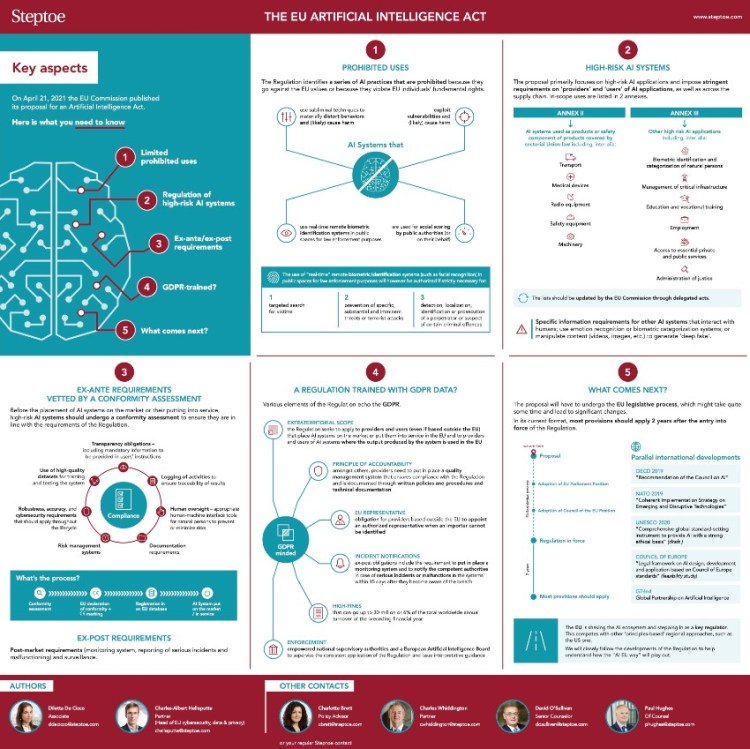
On the 4th of May DRAILS organized an Open talk around the EU regulation of #AI, presented by DRAILS members and cybersecurity, data, and privacy experts Diletta De Cicco and Charles Helleputte.
For an overview of the subject matter, see the very helpful infographic that they prepared :
New Laws of Robotics – Defending Human Expertise in the Age of AI
With F. Pasquale
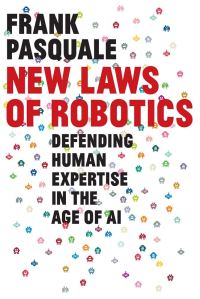
On the 1st of April DRAILS was pleased to host its second public event: a discussion around the newly published New Laws of Robotics – Defending Human Expertise in the Age of AI with none other than its author, Frank Pasquale, Professor of Law at Brooklyn Law School, NY.
Anatomy of an AI System
With R. Bellanova
On the 19th of January, our colleague Rocco Bellanova (USL-B et UvAmsterdam), gave a public presentation focussing on Crawford and Joler’s project from 2018 titled Anatomy of an AI System and published by AI Now Institute and Share Lab. This is a research and artistic project which produced a quite compelling work on “The Amazon Echo as an anatomical map of human labor, data and planetary resources”. It is available at https://anatomyof.ai.

 DRAILS